Work Won’tBreak My Soul
Ten practices for holding your energy through a working day, in the order the day happens. I tested every one of them on myself for three years before I wrote any of it down.
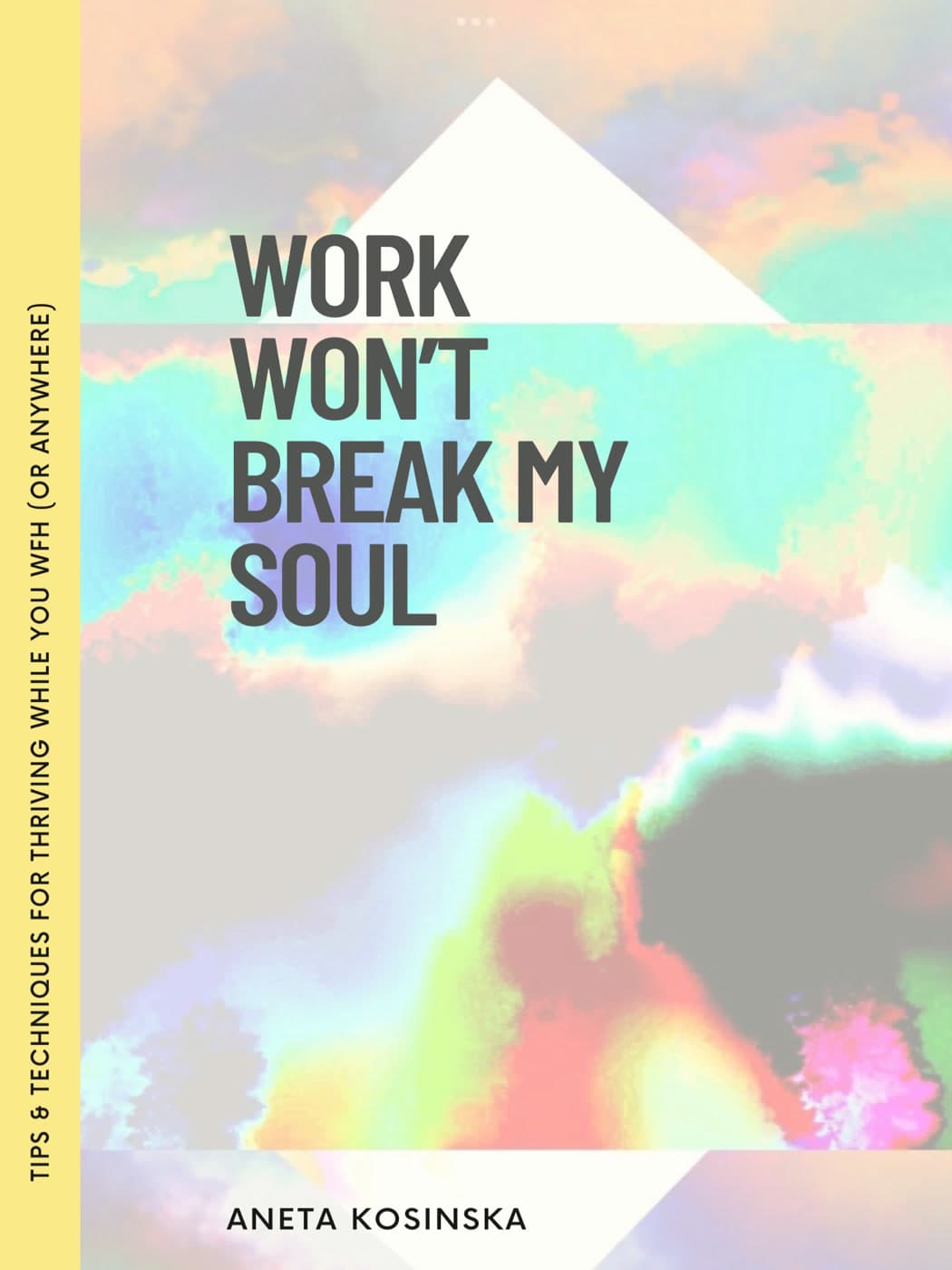
Tips and techniques for thriving while you WFH, or anywhere.
- 81 pages
- Three parts, ten named practices
- Around 45 cited studies
- 100+ vetted resources
- PDF, yours immediately
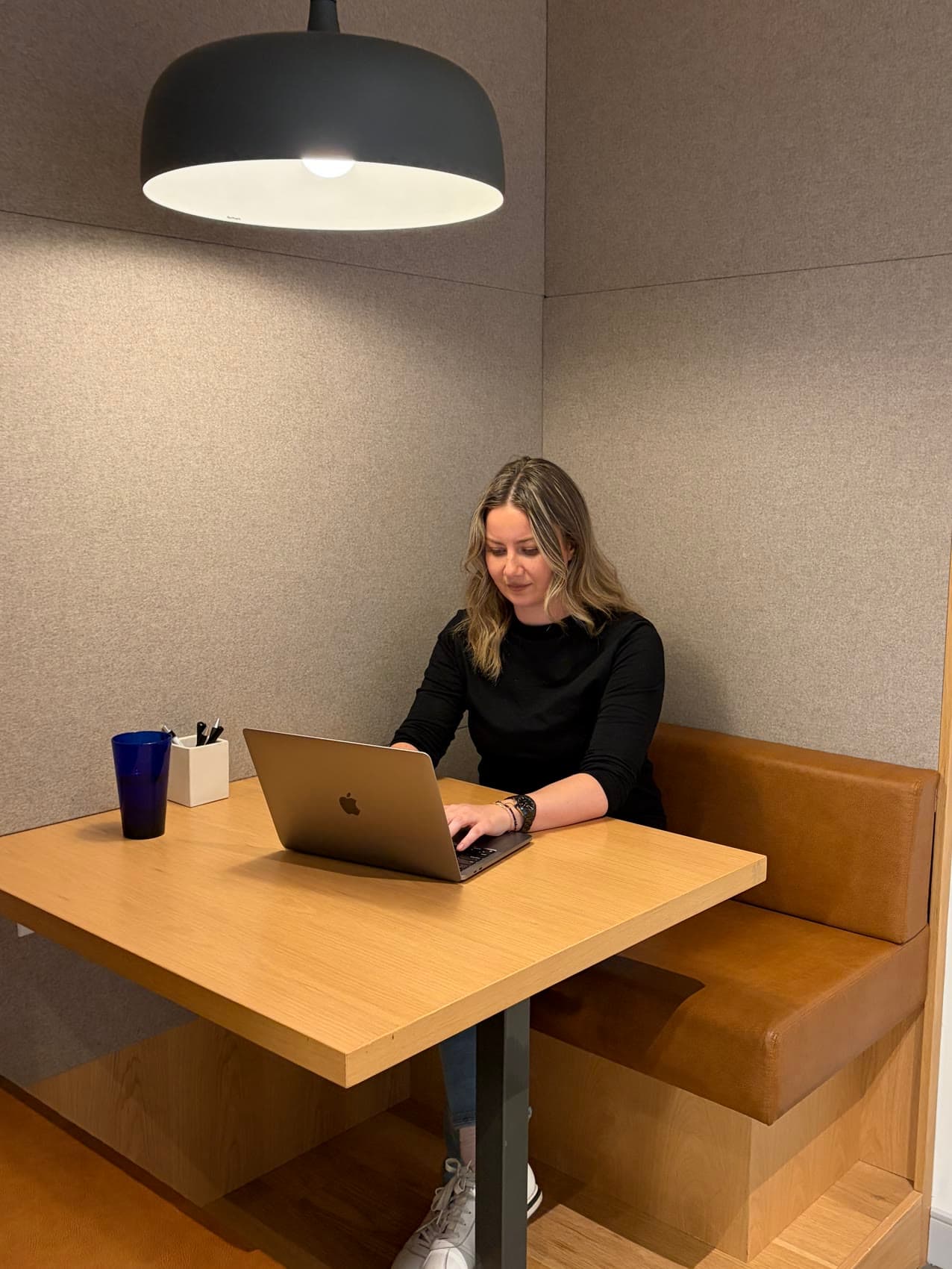
In 2018 I fainted in the main lounge of my office and was carried out on a stretcher. I was back the next morning giving a company-wide presentation. What stayed with me was not the fainting. It was the queue of colleagues who came up afterwards to tell me they had felt the same way, many times.
“They told me the feeling was normal; it was this type of rigor and commitment that made up excellence.”
Aneta Kosinska, page 6
I spent the next three years reading the research and running the practices on myself, looking for something that would move business as usual off the old paradigm of forcing through and on to actually understanding myself, my energy, and how I am at my best — personally and in the business. The book is the part that held: less force, more sustainable, built around energy rather than hours. Nothing in it runs on burnout.
“While we all have the same 24 hours in a day, we don’t all have the same quality and quantity of energy available to us each day.”
Page 26
- MorningPart one
Full 4
- Move Body
- Clean Mind
- Set Intentions
- Clean Up
- WorkdayPart two
The Switch
- Pause
- Observe
- Connect
- EveningPart three
Sunset
- Stop
- Drop
- Play
Also named inside: The GROW Formula, the Stop Time Heat Map, the Open Items Check-in, the Reset30 challenge, and The Remote Work Flywheel.
Every practice, the same five beats.
A consultant’s structure applied to a subject that usually gets none. Nothing is asserted without a source, and nothing is prescribed that I have not run on myself first. Each module closes with a table of vetted links so you can start the same evening.
Someone once told me I lived in Sedona and ran my day like a New Yorker. I am in Toronto now and Sedona is still with me, because I built it into this book on purpose.
- 01An epigraph, because I frame the idea before I argue it
- 02What the practice is, in plain language
- 03The research, cited, three or four studies per module
- 04Tips and tricks, numbered, down to the minute
- 05Personal: what I actually do, including the parts I still get wrong
Three of the roughly forty-five studies cited
Chance of a promotion or a raise for people who took more than ten vacation days in a year. For those who took fewer than ten, it was 34.6%.
Gielan, Harvard Business Review, 2016Percent more concentrated, more motivated, and more able to handle the workload, measured on the days people moved in the morning or were active at lunch.
Coulson, McKenna & Field, 2008Of our waking hours are spent thinking about something other than the thing in front of us, and that wandering tracks closely with stress.
Killingsworth & Gilbert, 2010Remote work has seven anchors. This book works one of them, Health and Well Being, all the way through a full working day. I say as much on the final page: this covers one anchor, and there is a lot more I can share. The other six can be solved for in the Sprint.
In the bookHealth and Well Being. The one anchor the book takes all the way through, across a full working day.
Honest about who it serves.
For the people doing the work day to day.
I wrote it for the interns, the front line, the people early in their careers, and anyone running a full workload from a kitchen table. It is a personal system for one person’s energy across one day. You can read it in an evening and run it for thirty.
If you lead a team, this is the book to put in their hands. It does the part of the work that no strategy deck reaches, which also makes it a very good employee retention book.
For the person accountable for the whole thing.
Three days with me, working at the level of the business rather than the individual: the root of stalled growth, the friction sitting underneath it, and the themes that organise you into the leader who is fit to lead the change.
The book closes on The Remote Work Flywheel and works a single anchor of it. The Sprint is where the rest gets worked.
See the Sprint“Over the past few years of working remotely, I became a better friend to myself and I ultimately wrote this so I could help you become a better friend to yourself.”
Aneta Kosinska, page 68
AI Anonymous Series
A small monthly room of people leading AI adoption inside their companies. One topic, chosen ahead of time, and no slides.
$42.00CADAsk about the next one